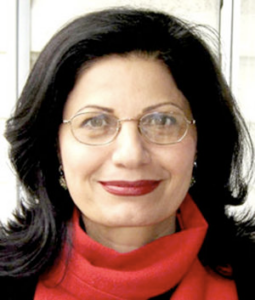
Playwright Ezzat Goushegir
Directed by Azar Kazemi
Featuring David Rhee and Diana Simonzadeh
My Name Is Inanna and Medea Was Born in Fallujah are powerful one act plays by award-winning Iranian American playwright Ezzat Goushegir.
Goushegir’s passionate, lyrical, and woman-centered voice blends classical archetypes and contemporary realities with an honesty that is shockingly raw and brutal. Political tyranny, democratic yearnings, exile, betrayal, and the confines of gender seamlessly crescendo in these stunning tales of modern Middle Eastern women.
As the political tension between Iran, Israel and the US continues to escalate, my responsibility to help foster understanding of Iranian culture, as well as being a bridge for peace, increases. Considering myself as a global citizen, loving my two countries and two nations, I believe the Western understanding of the Middle East is limited and colored by the lenses of media rather than historical facts. Arts, especially theater have always been dialectical art forms to speak of the truth (with all its relativity) and ultimately searching for a peaceful solution through dialogue. Words, songs, images and music are the essential/indispensable tools in response to violence and destruction. Learning about Middle Eastern culture will bring nations closer together for a better understanding among each other.
With this theory in mind I wrote Medea Was Born in Fallujah, a play in opposition to cruelty of war, and My Name is Inanna as a one woman show, which also deals with the oppression of women in tyrannical countries, the horribleness of war and torture, the redefinition of democracy and human rights, the situation of emigrants and exiled single mothers living in an adopted country, and their enormous power to overcome their frustration with language, work, isolation and identity.
My hope for those who see these plays is that it becomes a transcendental experience to elevate them to a level of solidarity and unity.